The Philadelphia Eagles’ Offense is Having an Identity Crisis

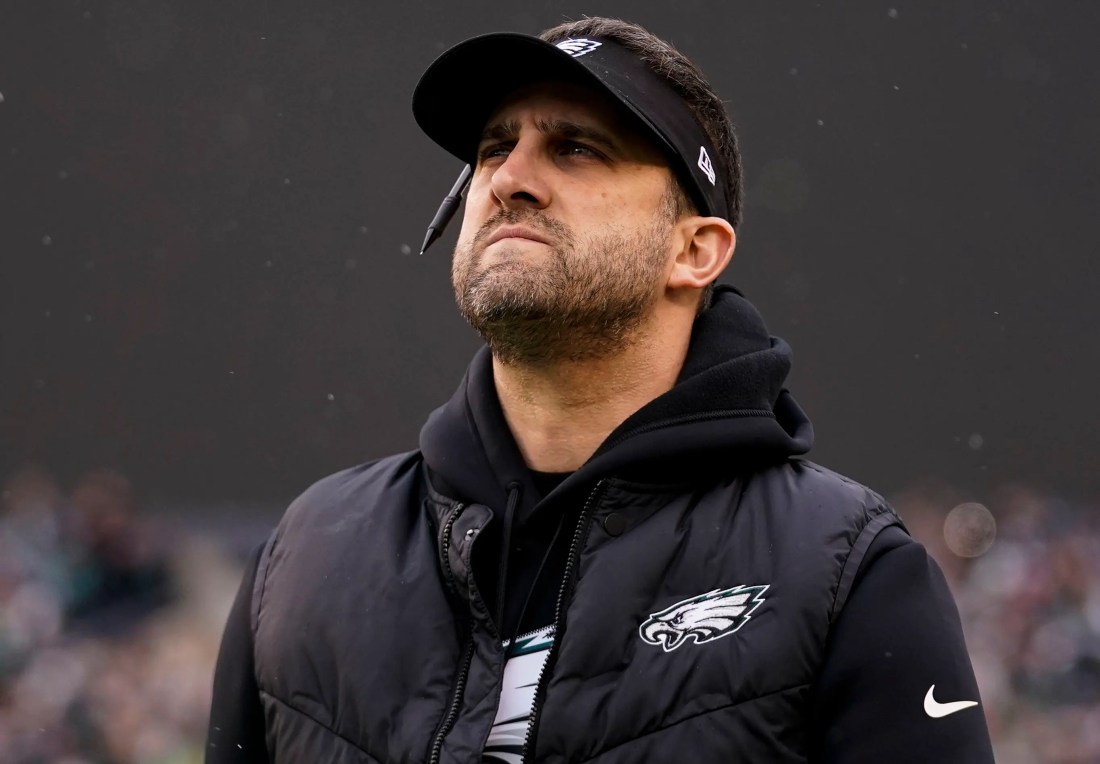
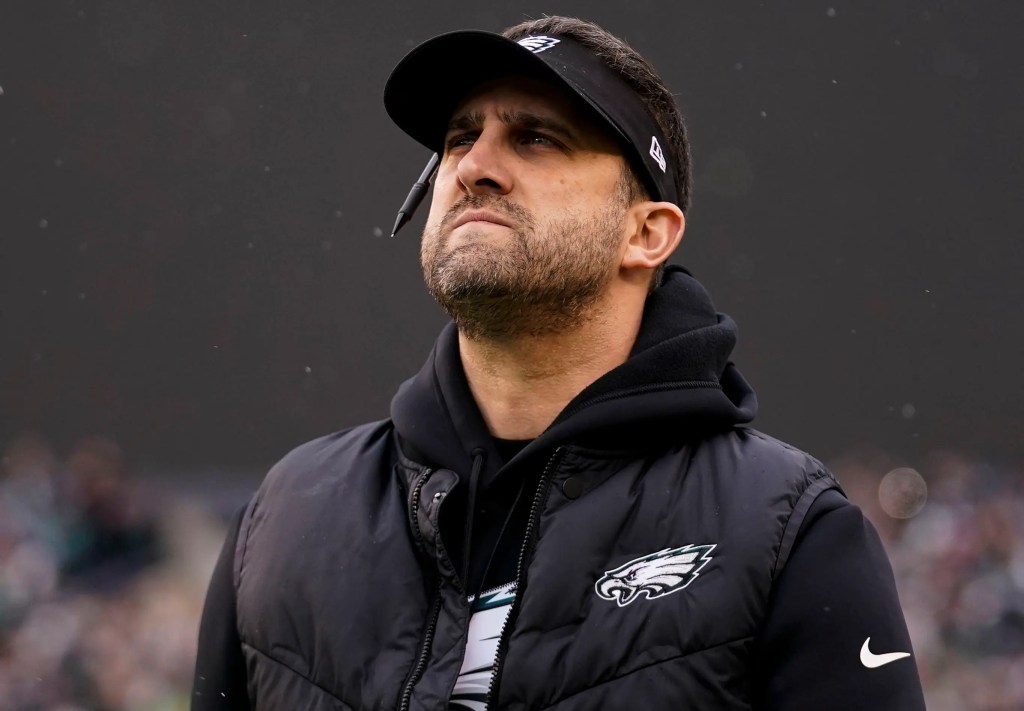
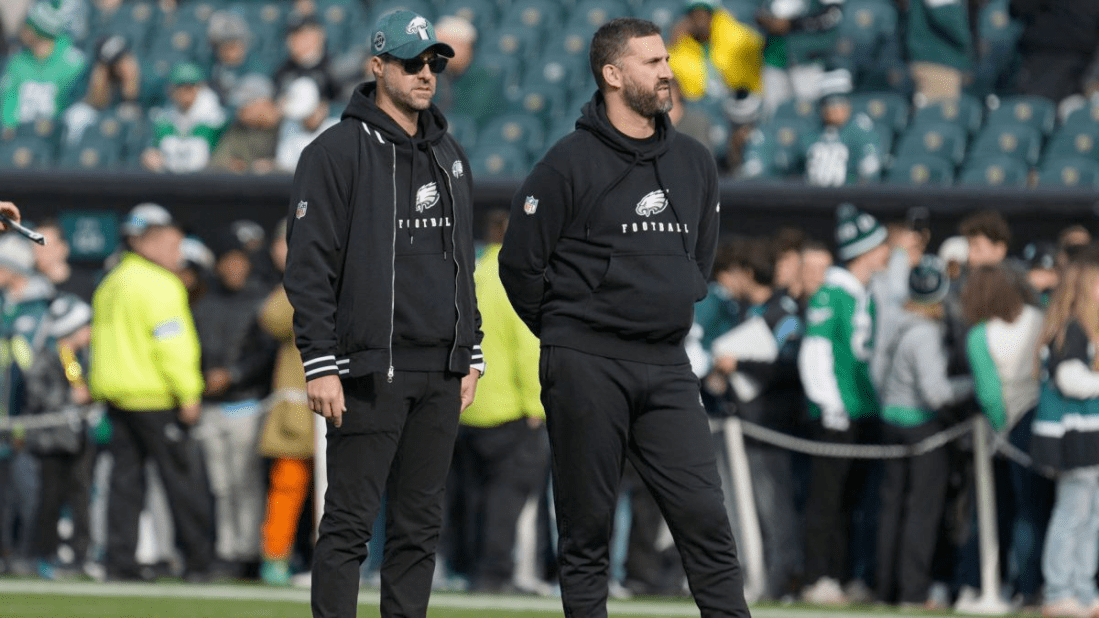
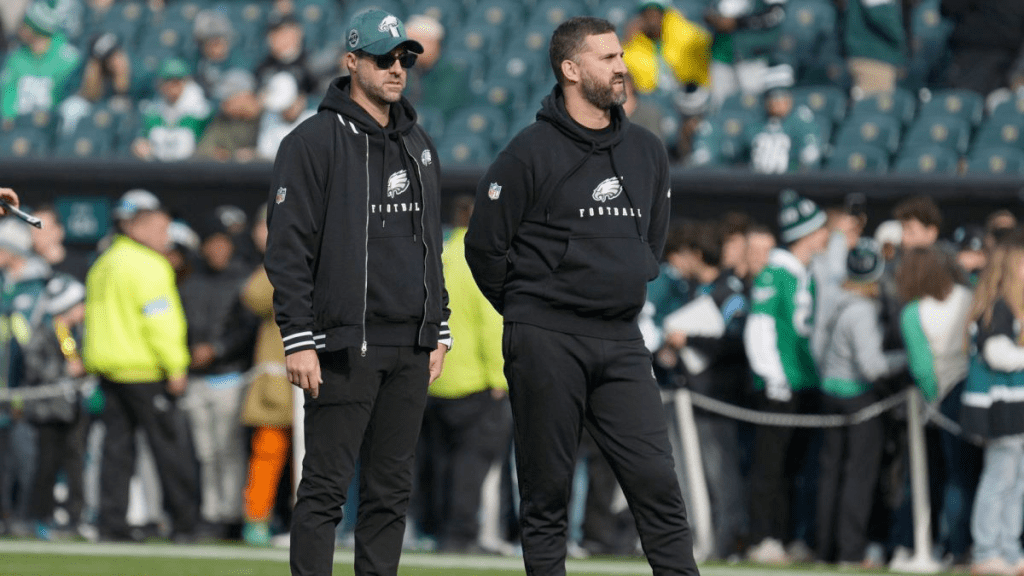
Eagles’ offensive coordinator Kevin Patullo and head coach Nick Sirianni on the sidelines at a home game. Photo credit: Getty Images

The Philadelphia Eagles are the most frustrating team in the NFL to watch right now.

The only team that seemingly can beat the Eagles is the Eagles themselves, and after four weeks of winning in unorthodox ways, they are now doing just that. In Week 5 against the Denver Broncos, Philadelphia was shut out in the second half and blew a 14-point lead within less than six minutes of the fourth quarter.

But even with the Eagles finally getting burned, absolutely nobody was prepared for what happened at MetLife Stadium on Thursday Night Football.

Despite escaping the jaws of defeat four times before and narrowly losing to the Broncos, they were absolutely steamrolled by the New York Giants with the entire nation watching.

Think about that for a second: The New York Giants STEAMROLLED the Philadelphia Eagles.

The Birds are 29th in yards per game with 274.5 and dead last in three-and-outs with a whopping 47 percent of their drives. They are also 4-2 and atop the NFC East. This alone almost perfectly encapsulates their season so far.

This team retained ten of eleven starters from last year’s Super Bowl team, but they haven’t even remotely resembled that offense. The seeming inconsistency in philosophy is what should be, and is sounding alarms around the city.

Six weeks into the season, teams shouldn’t be expected to have truly found themselves yet. However, they should at least have a direction, and this offense even lacks that.

This poses the big question: What in the world has happened to their identity?

Bad play calling loses games

It’s time to start finding Kevin Patullo responsible for the offensive struggles.

The criticisms surrounding his name, whether fair or unfair to the first-year offensive coordinator, are valid. Play calling is the biggest issue with this offense.

Philadelphia’s offense looked pretty good at first. The 31st-ranked passing game finally seemed to come alive in the first half as Jalen Hurts had over 200 passing yards in a half for the first time since 2023. A touchdown drive in the third quarter gave the Eagles a comfortable 14-point lead.

Patullo found a way to blow it.

The Eagles ran 24 offensive plays in the second half, and 23 of them were pass plays. Saquon Barkley, the running back who just set the record for most rushing yards in a single season, had just six carries for 30 yards in the entirety of the game and one singular carry in the second half.

Instead of sticking to the former identity of the Eagles’ offense and running the ball, Patullo called pass plays. That is not an execution issue – It’s a clear playcalling issue.

The best offensive coordinators don’t call plays. They call the game. They know how to get the offense into a flow, keep it flowing, and change things up when the flow gets disrupted. Patullo has not done any of these things thus far.

Patullo’s issues start at the top

While Patullo should be held accountable for his deficiencies, he can’t get 100 percent of the blame because he’s a rookie, and the guy who chose him to lead this unit is an offensive mind himself.

The Eagles have had four different offensive coordinators in the last four seasons. They constantly have leadership changes on this side of the ball, but Nick Sirianni is the one constant in all of them.

Shane Steichen and Kellen Moore controlled the offenses in 2022 and 2024, respectively. They were experienced coordinators and led highly efficient offenses that were at the top of the league in scoring and yards, and the bottom of the league in turnovers and three-and-outs.

Brian Johnson took charge of the offense in 2023. It was his first time as a coordinator, and he led a less efficient offense. They were at the bottom of the league in turnovers despite being seventh in scoring.

The difference between the 2023 Eagles and the other two could be that he couldn’t supply the guidance and assistance necessary for a first-time coordinator to be positioned for success. It sure seemed that way back then, and it appears to be the case right now.

It also should be noted that Sirianni gave up playcalling duties after a 2-5 start to the 2021 season, and after Steichen began calling plays, they won seven of their last ten games and clinched a playoff berth. He completely relinquished control over the offense the next season, and three OCs later, he still hasn’t taken it back.

He’s got plenty of time to get Patullo and this once great offense back in shape, but history tells us that’s not a likely scenario. Every game without an experienced offensive coordinator makes it clearer why he let go of offensive control.

The trenches aren’t what they used to be

Remember the days of Barkley breaking off big runs untouched multiple times a game? How about Hurts having so much time in the pocket that he had a whopping ten seconds to throw in a wild card playoff game?

Cherish them, Eagles fans. Because those days are OVER.

For the first time in Hurts’ career, the offensive line has significant issues, and it starts with the injuries.

All-pro left guard Landon Dickerson is still dealing with the meniscus injury he suffered in training camp, as well as an ankle injury he picked up in Week 5.

Dickerson specifically has been a huge problem for this team, as he is the faithful protector of Hurts’ blindside and the main lead blocker for run plays. But he has not been alone on the injury report. Lane Johnson and Cam Jurgens have also dealt with stinger injuries to their backs, and the latter’s required surgery.

The right guard position has also been problematic on this line. When Mekhi Becton left for Los Angeles, they assumed they had the next man up in Tyler Steen. But Steen has struggled with injury problems of his own, and he hasn’t quite filled the shoes of his predecessor even when he’s played.

Does the playcalling and lack of a sufficient passing game also contribute to the offensive line’s performance? Of course it does. Becton’s departure, the loss of some depth and the injuries all play a role in the line’s struggles.

But the simple fact is this is not the same historic O-line from last year. This is a massive problem for a team whose identity was historically based in the trenches.

Wait, isn’t winning the Eagles’ true identity?

Technically, it is, for now. But ultimately, it is until it isn’t.

Winning is never truly a part of a team’s identity. Consistent winning is not guaranteed in the NFL, even if you’ve won 20 straight games like Hurts’ Eagles. It might be in the identity of Philly’s core pieces, but the reality is that teams change a lot year-to-year.

The 2025 Eagles do not get to leach off the 2024 Eagles’ reputation of greatness. Last year, they knew exactly who they were and what they needed to do to dominate games in every aspect.

If the current Eagles want that greatness, they’re gonna have to earn it. They can start by showing that this offense understands what they need to do week-to-week to give them the best chance at winning.

Getting back to their old ways might be the solution, but without trench dominance, it could possibly be time for the Eagles to search for a new identity. That is for Patullo and Sirianni to figure out.

Until then, this offense ought to get comfortable at the bottom of the league. Because the Eagles’ offensive identity crisis is currently in full effect, and it will continue without significant change.
Homecoming Heartbreak at Montclair State as Red Hawks’ Comeback Falls Short

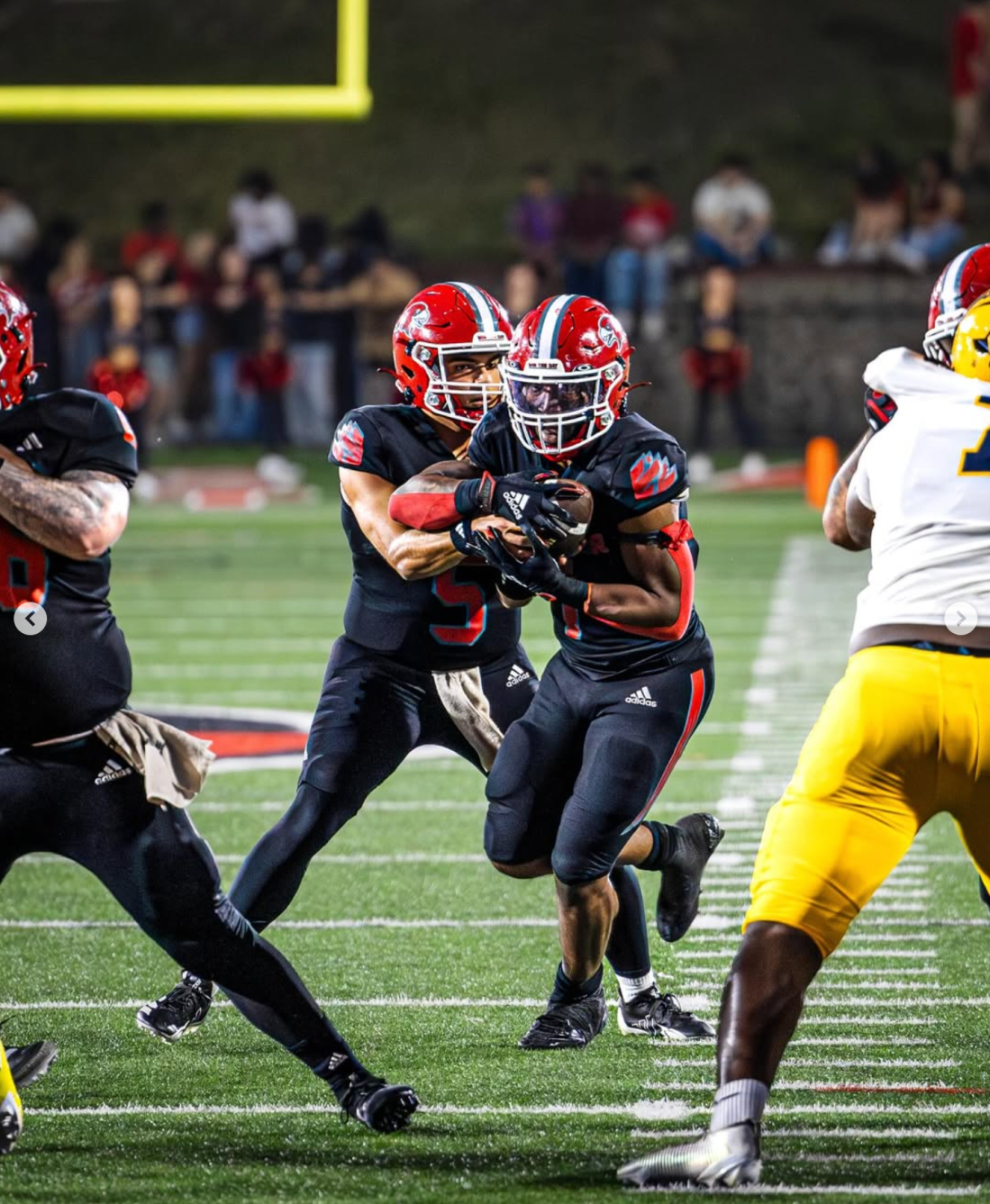
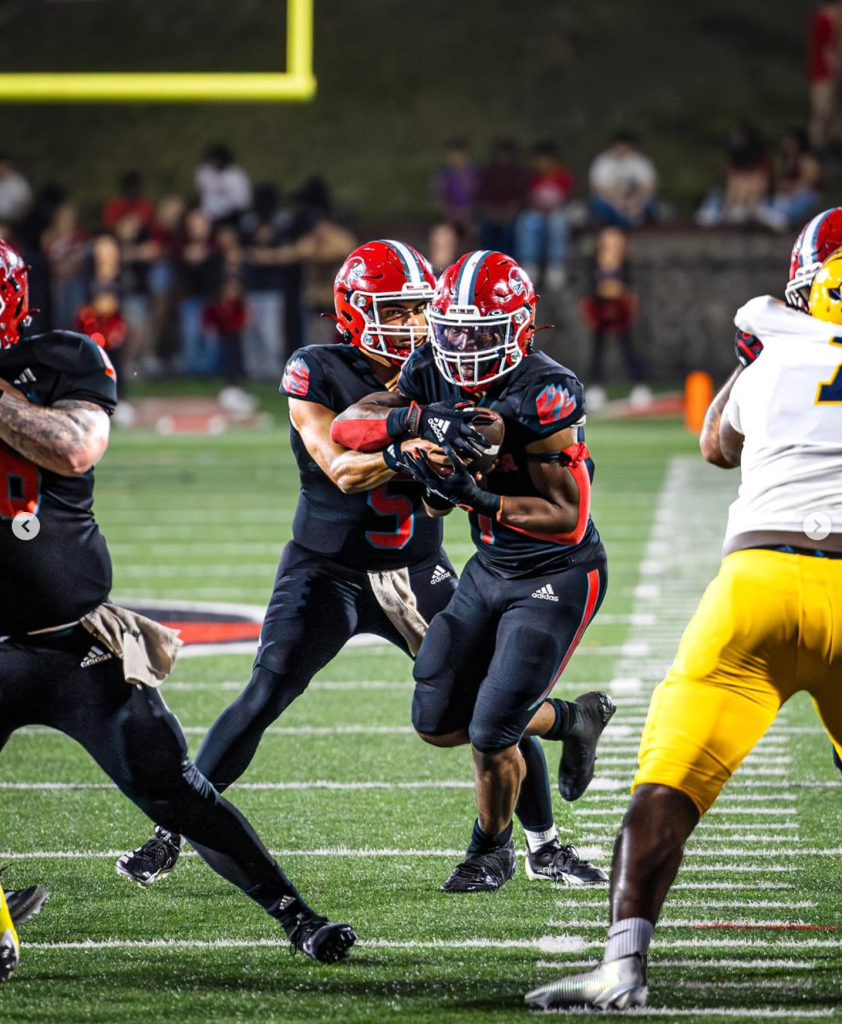
MONTCLAIR, N.J. 9/27/2025 – Montclair State quarterback Luke Henrich (9) hands the ball off to running back Diante Wilson (1).

Montclair State’s Homecoming matchup with Wilkes University seemingly had all the stars aligned for a magical finish. But, unfortunately for all of the fans that showed up and showed out at Sprague Field, the magic ran out in the game’s final moments, and they fell just short, 24-21.

After an abysmal first half, the Red Hawks soared back into the game and overcame a large deficit in the second half. Their valiant comeback efforts showed their resilience for the second week in a row, but this time, they could not quite escape the jaws of defeat.

This marks the first homecoming loss of coach Mike Palazzo’s tenure, and Montclair State falls to 1-2 on the season. 

The Red Hawks’ offense struggled heavily to find their rhythm in the first half. 

Of their first six drives, four of them were punted away, one of them was a botched punt that gave Wilkes the ball in the red zone, and one was fumbled away after a big third-down conversion.

The litany of errors committed early on in the ball game was highlighted by wide receiver TJ Kachala’s 47-yard touchdown catch, which was called back for a holding penalty, which turned out to be a crucial blown opportunity in the end. The lack of production put their defense in unfavorable spots and caused them to fall behind 14-0, which marked the third straight game that Montclair State faced a 14-point deficit.

However, even with the offense at a standstill, Kachala was not fazed.

“My mindset is always next play, new play,” Kachala said postgame. “I mean, guys make mistakes all the time. Who am I to blame him? Pick him up, and back at it next play.”

The mentality that he spoke of is a sentiment echoed by Palazzo’s staff and shared around the locker room, and it is exactly what kept Montclair State afloat throughout the nightmare first half.

While the first half was deflating for the homecoming crowd, the second half of the ball game told a completely different story. 

One minute after halftime, running back Chris Arnold rushed 70 yards to the house and put Montclair State on the board. Then, early on in the fourth quarter, Kachala’s mentality paid off, as his 75-yard touchdown catch tied the game. The Red Hawks flipped the game on its head and showcased the exact mentality of resilience that this group carries.

“It’s a football game, man,” Arnold said. “There’s a lot of ups and downs. Not everything is going to go your way… If we execute to the best of our ability, there’s not a lot of teams that could stop us, and the second half of last week was a great example of that.”

The late surge wasn’t quite enough to dig them out of the hole they dug themselves into in the first half, but despite the loss, the Red Hawks are feeling good about where they are at.

“I didn’t feel a lot of panic or anything like that from the team, which is always good,” Arnold said. It’s good to keep that poise, especially when you’re down… We still came up short, but we didn’t blink an eye, and that’s what I’m most proud of.”

“It hasn’t happened in the win-loss column yet, but we’ve certainly made some progress,” Coach Palazzo said. “We have a lot of first-year players, a lot of first time starters. So, we’re just trying to build these guys up the right way, and make sure they understand what we’re trying to do and the standard that we hold.”

“We have to start faster. I mean, we can’t be sleeping through the first half games, and just expecting to have a second half comeback.”

Coach Palazzo’s team will get another chance to improve on their slow starts when Montclair State takes the field at Kean University for their homecoming game. For now, they’ll look to clean up some of their issues this week on the practice field.

How Good Should the Eagles Really Feel About Their 4-0 Start?

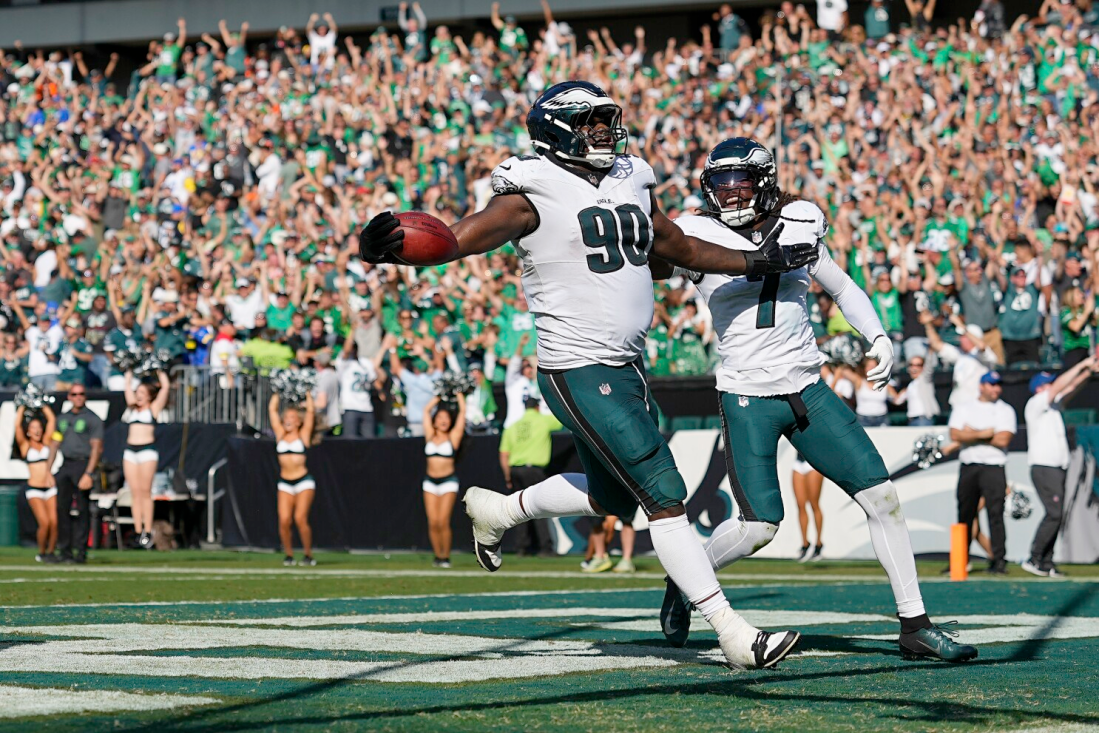
PHILADELPHIA, PENNSYLVANIA – SEPTEMBER 21: Jordan Davis #90 of the Philadelphia Eagles reacts after returning a blocked field goal in the final moments of the game for a touchdown against the Los Angeles Rams at Lincoln Financial Field on September 21, 2025 in Philadelphia, United States. (Photo by Mitchell Leff/Getty Images)

The year is 2025. September NFL football is complete. And, in a stunning turn of events for the city of Philadelphia, the Eagles are 4-0!

Just kidding. Of course, they’re winning.

At this point, Nick Sirianni’s Eagles winning football games has become a near guarantee. Including the playoffs, they’re 18-0 in their last 18 games when Jalen Hurts finishes and 49-14 overall since 2022.

But despite their 4-0 start, the Eagles have had their fair share of struggles as well.

If the off-season wasn’t enough to convince fans before, these first four games have made it very clear that this is not the same team as last year. From significant roster turnover to a new offensive coordinator, Philadelphia has gone through a lot of changes since it won the Super Bowl in February, and the results of the first four games are showing that.

With the second quarter of the season now beginning, it is time to get real about the 2025 Philadelphia Eagles.

Eagles’ Offense

Let’s just get the main topic of discussion of the way right now: The Eagles’ offense has been the only unit of this football team that is somewhat concerning, and the more they play, the more concerning it gets.

A few positive things can be said about this offense right now, but nothing more than that. They are eighth in the league on third down, converting 41.8 percent of them, and 5-of-7 on fourth down on the year.

Hurts has been excellent in key moments throughout these games. From converting first downs and touchdowns by scrambling, or making key throws to A.J. Brown, DeVonta Smith, Dallas Goedert, and Jahan Dotson, he has made an abundance of plays in the most important moments, especially in the Los Angeles Rams game.

They have been good enough situationally to win football games. Although their objective every week is to play good enough to win, what they don’t want is to be is ” just good enough.” Right now, that’s exactly what they are.

For a championship team that has consistently put out one of the most high-powered offenses over the years, this offense has been boring, basic, inefficient, wildly inconsistent, and borderline unwatchable.

The December 2023 collapse is the only other time in the last three years that those words could be used to describe the Eagles’ offense. Right now, they resemble that team in some ways as well.

Offensive coordinator Kevin Patullo was promoted from his passing game coordinator role to take control of the offense for the first team, and so far, it has been a rough transition from Kellen Moore.

The passing game has been almost nonexistent, and the film shows it’s not all on Hurts. The passing concepts look barebones.

Brown and Smith have run simplistic, repetitive routes that have become easy to predict and guard in zone coverage. The lack of production in the passing game has allowed teams to sell out on Saquon Barkley more and more every week. It is very concerning that a top-five receiver like Brown has only one game with more than 27 receiving yards this far into the season.

The offensive line has struggled more than usual as well. Albeit, Landon Dickerson’s injury is clearly having a major impact on his play, and this line overall is not quite as deep or talented as it was in 2024. They have struggled to open up running lanes for Barkley, and the pocket has collapsed in pass protection far too often for a historic unit.

There is too much talent being wasted in Patullo and Sirianni’s offense, and it’s going to cost them at some point.

Following the win at Tampa Bay, Brown posted a now-deleted tweet of a Bible verse that read, “If you’re not welcomed, not listened to, quietly withdraw. Don’t make a scene. Shrug your shoulders and be on your way.”

Key players are starting to get frustrated and impatient with their lack of production and involvement. They know that they are not playing at a championship level, and that is a major issue for a team that holds itself to a championship standard.

So, the 2025 Eagles may be 4-0 right now, but if they don’t figure out how to get the playmakers involved, this offense will eventually cost them games.

Eagles’ Defense

Vic Fangio might just be the greatest thing to happen to Philadelphia since Rocky movies.

Despite the loss of many key players from 2024, the Eagles’ defense has been impressive through these first four games of 2025. Although the stats don’t look great with the Eagles being ranked 16th in points allowed per game and 21st in yards allowed per game, they have made outstanding plays in pretty much every single key moment.

When the offense stalled out in the second half of Week 1 against the Dallas Cowboys, the defense rose up and pitched a second-half shutout.

In Kansas City, the Chiefs were about to score and take the lead late in their Week 2 matchup, but they turned a potential nail in the coffin into a 14-point swing with an interception in the end zone.

Against the Rams, Philly overcame a 19-point deficit in the second half because the defense made plays. They forced turnovers that led to a touchdown in the first half, and then forced three-and-out after three-and-out to give the offense the chance to correct their putrid first-half play.

The Eagles’ defense seems to have picked up right where they left off last season. If the offense didn’t put them in many tough positions, their numbers would match the tape.

Zack Baun and the linebacker corps have been outstanding. Baun is proving that his leap from ordinary special teamer to first-team all-pro inside linebacker was not a fluke. Jihaad Campbell has played so excellently filling in for Nakobe Dean that he might have a chance to take the job from Dean.

Quinyon Mitchell is well on his way to an all-pro season at the corner position. He has gone up against some of the league’s best receivers this year, such as CeeDee Lamb, George Pickens, Puka Nacua, Davante Adams, Chris Godwin, and Emeka Egbuka, and none of them have been able to produce while being guarded by Mitchell.

The safety position group has exceeded expectations. Rookie Andrew Mukuba has done well taking over for C.J. Gardner-Johnson and has made some good plays, including the pick that turned the Chiefs’ game around.

Unfortunately for them, however, unlike last season, this defense does have a few flaws.

The outside cornerback situation opposite of Mitchell is an issue. With all due respect to the nine-year veteran, Adoree’ Jackson is not the answer, and this will likely continue to be the biggest hole on the roster. Jakorian Bennett or Kelee Ringo are also options and have seen playing time, but one of them will have to elevate their game, or this will continue to be an issue.

The defensive line has also been through its ups and downs, and this was expected to a certain degree, since the d-line suffered the most losses in free agency. Production from the edge has been lacking, and Nolan Smith being on injured reserve doesn’t help. Za’Darius Smith signed with Philly after Week 1, and he has made some solid contributions, but Fangio is going to need more from that position group.

The interior line has been outstanding despite the edge struggles. Jordan Davis is having a monster season in his contract year, and he seems to have finally taken his game to that next level that the Eagles have been hoping for since they drafted him 13th overall in 2022.

Jalen Carter has been the same beast that he’s always been, although some of his antics definitely caused the team issues. His Week 1 ejection for spitting on Dak Prescott and other unsportsmanlike conduct penalties are unacceptable, and even though he is a top defender in the NFL, he needs to clean those up so that he does not become more trouble than he’s worth.

Overall, there are no major concerns for the Eagles’ defense. This young unit will get better as the season progresses and will continue to be one of the best in the league.

The Big Picture

The 2025 Eagles have not been perfect. Yet, they are one of two teams in the NFL that are 4-0.

The truth is, they have been impressive in September, even with their struggles.

In the context of preseason expectations, the Eagles had one of the hardest schedules in the first four games. They had to play their division rival, the Cowboys, Super Bowl rival, the Chiefs, a Rams team that is a top NFC contender and was the closest to beating the Eagles in the playoffs, and the Tampa Bay Buccaneers, who beat them badly in consecutive years prior. They managed to beat all of them.

Beyond who they played, what makes them truly impressive is how they have won. They have won in many different ways. Special teams contributed huge plays, blocking those two field goals, saving the Rams game, but that was after they scored 20 unanswered to even get in that position.

In just these first four games, they won two close back-and-forth games, a 20-point comeback, and a game that was effectively over by halftime.

The Philadelphia Eagles always win games, no matter what it takes or what it looks like. It’s not always pretty, and they definitely have some work to do if they want to repeat as Super Bowl champions. They should not feel good with their performances thus far because the standard in Philly is excellence.

Eagles fans, however, should feel good. Winning is in the Eagles’ DNA, and no matter what, they always find a way to win. The Hurts/Sirianni era has been successful like no other duo in NFL history over their first four seasons, and it’s continuing now.

The Eagles still have some time to work out their issues. For now, the Eagles are undefeated, and winning ultimately is “the main thing” in Philadelphia.

No Curry, No Chance: Why the Warriors Failed Without Steph

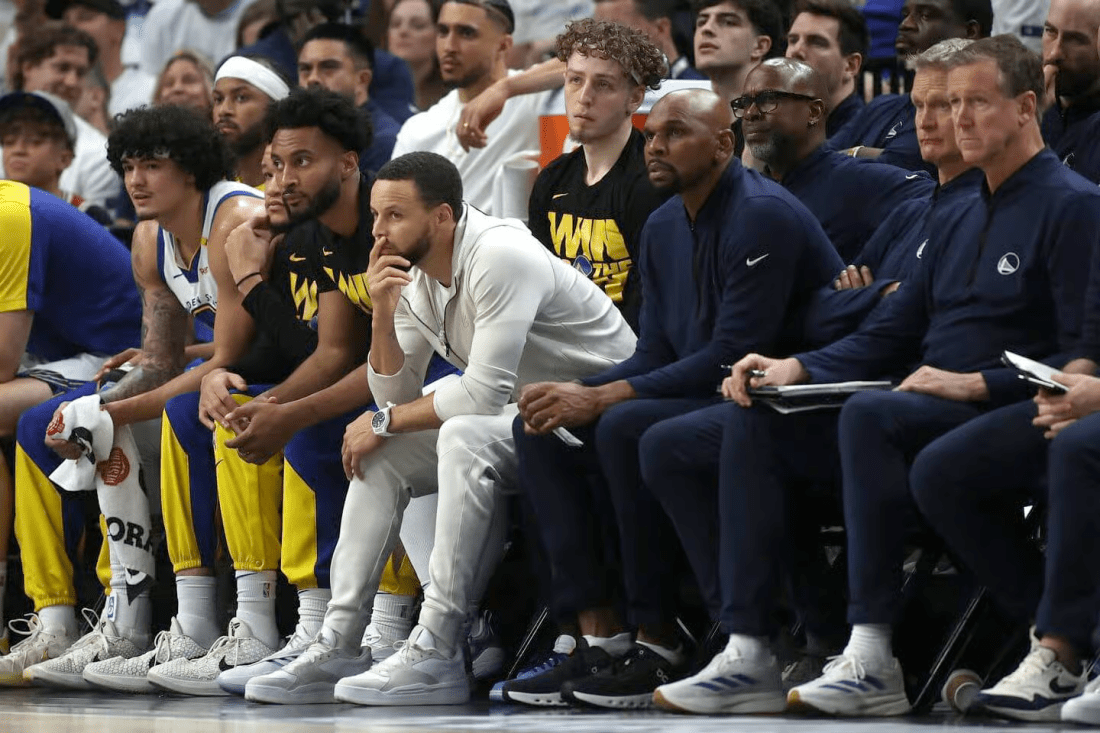
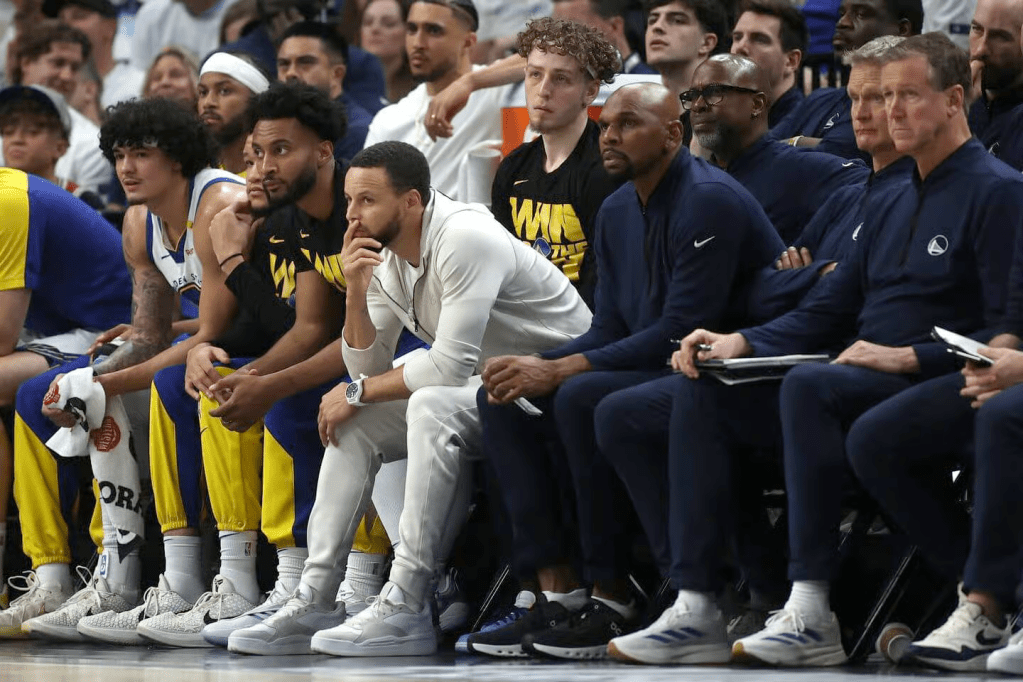
Injured Golden State Warriors guard Stephen Curry watches from the bench as the Minnesota Timberwolves eliminate Warriors from 2025 NBA Playoffs. Photo Credit: Getty Images

Just a little while ago, the Golden State Warriors seemed inevitable.

Two days removed from a grueling seven-game battle with the Houston Rockets, the Warriors went into Target Center and defeated the well-rested Minnesota Timberwolves in Game 1 of the Western Conference Semifinals.

The multi-time champions looked primed to make yet another deep playoff run.

Then suddenly, Stephen Curry went down.

And then suddenly, so did Golden State’s championship hopes.

The belief within the organization was that Curry could return from his hamstring injury for Game 6 if they could just hold off Minnesota for one game.

They failed to do so.

Not only did they lose four straight games in Curry’s absence, but they also trailed by 15 or more points in each one.

We have seen teams win games in these playoffs without a star player. The Celtics managed to win a game without Jayson Tatum. The Cavaliers won multiple games without Darius Garland.

So, why couldn’t the Warriors win without Stephen Curry?

The Absence of the “Curry Effect”

If Steve Kerr and his revolutionary offense are the brains of the Warriors’ operation, then Curry is the heart that makes the whole thing run.

Despite roster limitations on both this Golden State team and previous ones, they maintain offensive efficiency and game competitiveness through their ability to create quality opportunities for role players.

The biggest reason for their constant offensive effectiveness comes from the “Curry effect.”

In the Curry era, tons of role players have been effective in Golden State playing with him. Just in the previous three years, guys like Andrew Wiggins, Jordan Poole, Donte DiVencenzo, Otto Porter Jr. and Gary Payton II played arguably their best basketball with the Warriors and declined after leaving them.

This 2025 team was no different. Players like Buddy Hield, Brandin Podziemski, Moses Moody and even Jonathan Kuminga stepped into sizable roles. They get to play freely in the Warriors’ offense and get a lot of great open looks.

The reason? Steph Curry was being double and triple-teamed on AND off the ball.

What separates Curry from everyone else beyond being the greatest shooter ever is the fact that he is such a threat without the ball, he often has multiple defenders following him around the court, even without the ball.

In the Rockets’ series, almost every time Curry got the ball or an on-ball screen, they double-teamed him beyond the arc and had a third player lurking near the paint to step up if needed. For off-ball screens, they promptly switched and stayed with him every time.

What did this open the door to? Easy shots, efficient field-goal percentages, and even numerous 25-30 point games from Hield, Poziemski, and Jimmy Butler III.

What happened without the “Curry effect” in the Timberwolves series? Diminished-quality looks and diminished offensive production.

Poor Play from Supporting Cast

In the first round against the Rockets, the Warriors got outstanding contributions from role players in key moments throughout the series.

Buddy Hield shot 47.5 percent from the field. He also scored 33 points and hit a record nine three-pointers in Game 7.

Draymond Green played outstanding defense on Alperen Sengun—one of the best post players in the league—including a game-sealing stop while effectively orchestrating the offense.

Although Brandin Podziemski struggled a bit, he dropped a team-high 26 points in a pivotal Game 4.

None of those guys replicated their production in the second round despite the increase in minutes.

In fact, all of Golden State’s role players underperformed in the Timberwolves series. They all had lower field-goal percentages, lower point totals, and more scoring droughts throughout the series except for Jonathan Kuminga, who didn’t even have a spot in the rotation a week ago.

Even Draymond Green, their best and most consistent defender, underacheived in his role.

Kerr’s job was exponentially more difficult without Curry because of this. It was almost impossible to find a reliable rotation with the way this team is constructed.

Fourteen players saw the floor in Game 2—an astronomical number, especially for a playoff game.

It doesn’t take a genius to know that’s not the situation that you want to be in Game 2 of a playoff series.

That’s what the preseason is for. That’s what the 82-game regular season is for. In reality, that’s what the entire calendar year is for EXCEPT April, May and June.

No team is going to be the same without its best player. But if you have to figure out how to look like a competent professional basketball team because your star got hurt, that’s a pretty good indication that the roster is flawed.

This team lacks size, athleticism, defense, young talent and additional shot creators outside of Butler. There are many things that this team is missing and the lack of balance is what made it so hard to adjust.

Jimmy Butler III’s Passive Play

Let’s address the uncomfortable elephant in the room for Warriors fans: Jimmy Butler was a huge disappointment in this series.

A few weeks ago, Butler called himself the Robin to Curry’s Batman. And I don’t blame him: There’s nothing wrong with being a sidekick to Steph.

But he clearly doesn’t realize that the Warriors traded for him and gave him a two-year, $111 million dollar contract extension to be Batman when needed. And with Curry’s absence, they absolutely needed him to be Batman.

Warriors fans weren’t the only ones expecting Butler to be “Playoff Jimmy.” The team also clearly was expecting better showings from him.

Butler led the team in minutes per game and total minutes throughout Golden State’s playoff run with 36.3 and 436 respectively. One of Kerr’s adjustment attempts was to run his offense through Butler.

In a post-game press conference after the Warriors’ stole Game 1 in Minnesota, Green was quoted saying “Jimmy’s capable of carrying the team. He carried a team to the Finals twice, so we won’t panic. We’ll figure out what that means.”

It turned out to mean almost nothing.

The main problem wasn’t necessarily his play—though he did miss more uncharacteristic layups and open shots than usual.

The real issue was his lack of aggression.

When you are the first option on any team let alone a playoff team, you should be taking at least 20-25 shots a game. Even if the shots aren’t falling, at least you can produce by getting to the free-throw line.

Butler didn’t even lead the team in field-goal attempts in multiple games.

Taking 13 or fewer shots in three out of four games will not lead to star-level production. You’re not going to open up opportunities for your teammates either.

In a series against a team with a clear superstar in Anthony Edwards, the Warriors needed Butler to step up and be their superstar. But he never shifted out of the “Robin” mindset.

Because he didn’t rise and lead the charge, the Warriors got gentlemen swept.

The Bottom Line

Without Stephen Curry, the Timberwolves are simply a better basketball team than the Warriors. Period.

The T-Wolves’ roster is deeper, bigger, stronger, faster, more efficient on all three levels, and features the best player in the series by far.

Most importantly, they know exactly who they are.

Without Curry, the Warriors do not.

Ultimately, there is nothing that the Warriors do better on the court than the Minnesota Timberwolves if Stephen Curry is in street clothes—even when they aren’t playing their best basketball.

If the Warriors are serious about competing for championships moving forward, general manager Mike Dunleavy Jr. and the front office have a lot of work work to fix this team’s major issues.

Steve Kerr Deserves More Credit for the Warriors’ Success

Golden State Warriors head coach Steve Kerr gestures during the second half of an NBA basketball game against the New York Knicks, Saturday, March 15, 2025, in San Francisco. (AP Photo/Benjamin Fanjoy)

Four NBA championships. Six NBA Finals appearances, including five consecutive. A coach of the year award. Voted a top 15 coach in NBA history by his peers. Won 70 percent of his 148 playoff games. Set the record for most wins in an NBA regular season with 73.

All in 11 seasons–yet Steve Kerr still doesn’t get the credit he deserves.

Despite his accomplishments rivaling those of coaching legends such as Gregg Popovich, Don Nelson, Pat Riley and Phil Jackson, the general public scoffs at anyone who mentions his name with the other greats.

Kerr’s Golden State Warriors have been the gold standard of professional basketball since he began coaching them in the 2014–15 season. Immediately after taking over the team, they evolved from a young squad with a bright future under Mark Jackson to one whose future had officially arrived. 

While he has benefited from having all-time great players like Stephen Curry, Klay Thompson, Draymond Green and Kevin Durant play for him, Kerr’s consistency, offensive innovation and game-changing playoff decisions get overlooked far too often in NBA dialogue.

Kerr’s offensive system took the league by storm. By combining principles of Phil Jackson’s triangle offense and Gregg Popovich’s motion offense, the Warriors won a then-franchise-record 67 regular-season games and finished third all-time in three-pointers made in a single regular season. Curry had a breakout season in this offense, winning the 2015 MVP award and setting a NBA record for threes made in a single regular season with 286.

In just one year under Kerr’s leadership, this team transformed and looked ready to win championships.

And that’s exactly what they did.

In the 2015 NBA Finals, Kerr’s Warriors defeated the Cleveland Cavaliers in six games and brought the first NBA title to the Bay area since 1975. He became just the third coach in NBA history to win a championship in his first season as a head coach, joining Paul Westhead and Pat Riley. Forward Andre Iguodala took home the Finals MVP honors. 

But the real MVP of that series was Kerr himself.

After Game 3 of the 2015 NBA Finals, the Warriors trailed 2–1. They seemingly had no answers for LeBron James, who scored 44, 39, and 40 points in the first three games, and their championship hopes were looking bleak.

Then, Kerr made a bold lineup change that completely flipped the series in favor of Golden State.

He inserted Iguodala into the starting lineup ahead of Game 4 in place of center Andrew Bogut. The move had multiple motives: Slow down James’s production, increase their offensive pace, and force the Cavaliers’ role players to beat them.

This small-ball lineup of Curry, Thompson, Iguodala, Green, and Harrison Barnes was Kerr’s solution to the James problem.

Newsflash: It worked. 

In Game 4, James posted series lows in points, shot attempts, field-goal percentage, and three-point percentage. The Cavaliers as a team shot 2-for-18 from the field and were outscored 27–12 in the fourth quarter, and the Warriors stole Game 4 in Cleveland by a score of 103–82. This turned the tide of the series, and the Warriors would not lose another game.

Kerr’s role in winning the 2015 title does not get talked about enough when discussing Golden State’s dynastic success. But that was nearly a decade ago. Consider a more modern example of Kerr’s genius. 

Last week, the seven-seeded Warriors faced the second-seeded Houston Rockets in the first round of the 2025 NBA playoffs. To the young Rockets’ credit, it was a hard-fought series. Coach Ime Udoka tried to combat the Warriors’ now-notorious small-ball lineups by giving extended minutes to center Steven Adams.

After three games and most of Game 4, this strategy seemed to be working. Adams had four blocks and seven rebounds in Game 4, and Golden State was struggling with his dominant physical presence.

Kerr’s solution? Simple: Get him off the floor.

During the fourth quarter, he implemented a plan similar to that of the “Hack-a-Shaq” strategy. Because Adams is a bad free throw shooter and shot about 53 percent overall in the series, Kerr instructed his team to intentionally foul Adams. 

When he realized what was happening, Udoka saw no other option but to take Adams out of the game due to this liability.

Kerr forced Udoka to play right into his hand, and it worked. This brilliant move propelled his team to win the game 109–106 and take a commanding 3–1 lead in the series. And, just like most teams that take a 3–1 lead, the Warriors would win the series and send the second seed home.

These types of series-defining coaching decisions can be found all throughout his playoff career. The greatness of Curry and others may overshadow them, but Kerr is a master of the details. His offensive schemes, in-game and in-series adjustments, and his sustained success in the postseason are exactly why he is worthy of being on the 15 Greatest Coaches in NBA History list.

Steve Kerr is one of the greatest basketball coaches of all-time and undoubtedly deserves to have his name mentioned with the other legendary coaches in the sport. It’s time for the NBA community to finally start treating him that way.

Simone Biles and the Framing of Mental Health in Professional Sports

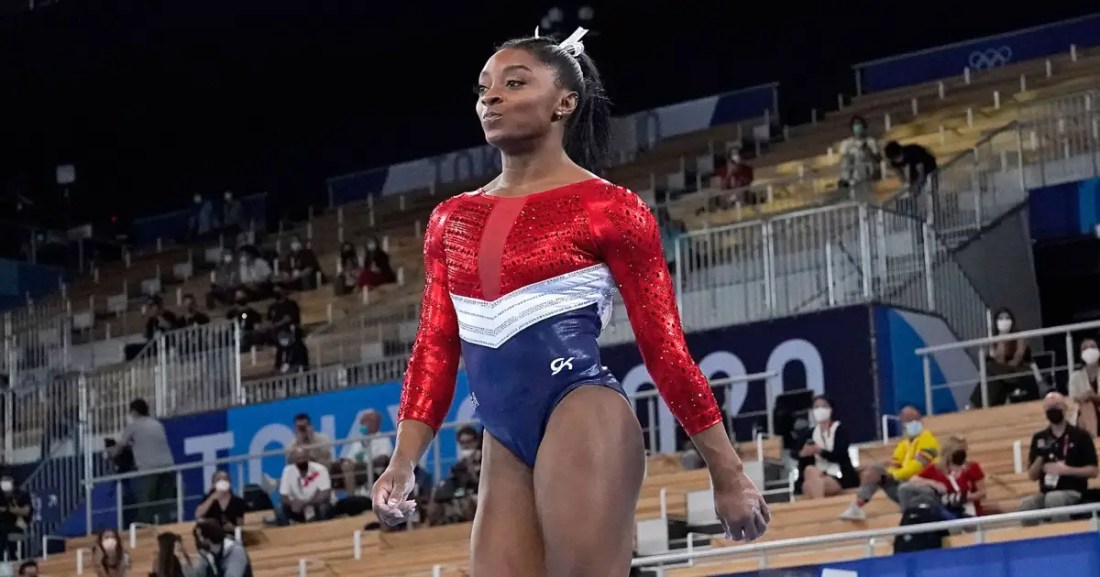
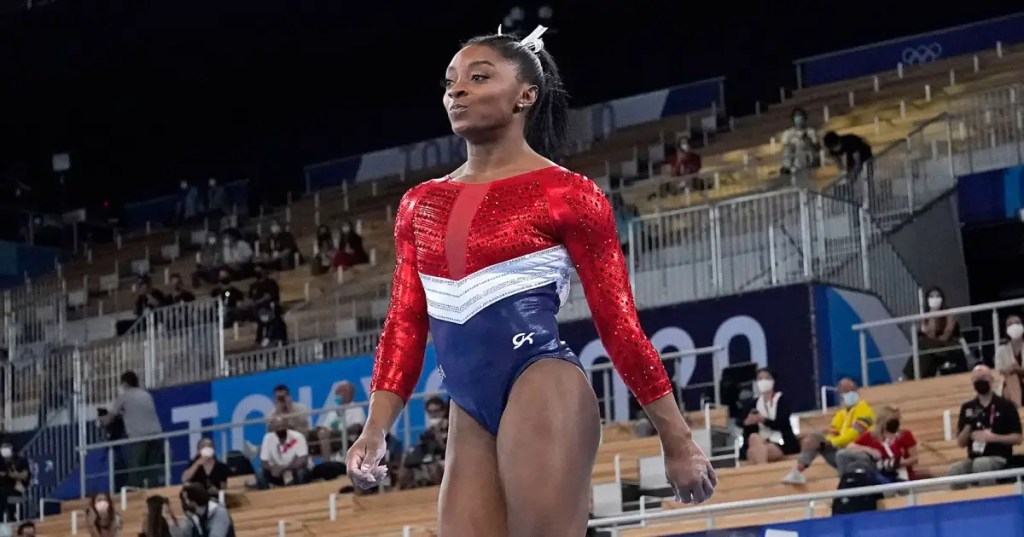
Simone Biles walks after performing on the vault during the women’s artistic team all-around finals at the Tokyo 2020 Summer Olympic Games on July 27, 2021 in Tokyo, Japan. Ashley Landis/AP

The topic of mental health in professional sports is one of the most prominent in modern sports discourse. In a world where the sports world is constantly evolving and the sports media landscape is rapidly changing; there have been few issues that went from being widely overlooked by the sports world to becoming a sensationalized and controversial discussion the way that the topic of mental health in sports did when superstar gymnast Simone Biles announced that she would be immediately withdrawing from the Tokyo 2020 Olympics due to mental health troubles and not being in the right mental space to be able to continue competing without risking getting hurt. This news made shockwaves around the world, especially in the United States, who had learned that one of the best athletes the country had to offer would not be out there to help Team USA defend their 2016 crown. There was a wide range of reactions to this news, and this sparked a grander intense conversation within the media about how professional athletes’ mental health should be treated. This paper will examine data from numerous reports from American media outlets to analyze how the media framed Biles’ decision to withdraw from the competition, explore what frames emerged, how these frames influenced the public discussion about the treatment of mental health in professional sports, and identify some of the broader ramifications that media framing has and opportunities for positive change in the sports community. 

Professional athletes have long been subjected to narratives about never-give-up ideology. Oftentimes, athletes are expected to be tough, brave, and resilient in the face of adversity from the moment they decide to participate in a sport. This mentality is generally seen as great for athletes to have, and many professional athletes attribute their success to this ideology. Members of the sports community, from pro sport executives all the way down to the casual fan, praises those who exhibit these characteristics and criticize or shame those who do not, and subsequently, sports media has a deep history of framing athletes within the constructs of these ideas. However, the universal adoption of these values in sports has posed some issues in recent history because there are seemingly no exceptions or considerations for the mental state and health of these athletes. The national shift toward mental health awareness spread into the sports world, and athletes such as Naomi Osaka, A.J. Brown, Michael Phelps, and many others have spoken out about their own battles and the constant pressures that they feel to continue to perform and keep their mental health struggles as afterthoughts. A lot of high-profile names have encouraged others to prioritize their mental health and get treatment if they are struggling, but in the case of Biles, her decision to withdraw from the Olympic games due to her struggles was the first of its kind. It not only put a sudden giant magnifying glass on an issue that was gradually making its integration into sports culture, but also gave the media the leeway to be able to frame this situation and set the tone for the mental health public discourse that would soon follow. This essay will attempt to answer questions about how various media outlets initially reported Simone Biles’ withdrawal from the Tokyo 2020 Olympics, what narratives emerged in the media about Simone Biles’ mental health and her decision to withdraw, what impact the framing of mental health in professional athletics had on the public perception about mental health in sports. The media’s response to Biles’ withdrawal will be observed using media framing theory, a concept that explains the ways that the media presents, emphasizes, and deemphasizes specific aspects of a situation in pursuit of shaping the way that the audience interprets and subsequently judges it. By applying this theory to her situation, we can answer these questions as well as the ultimate question: Did the framing of Simone Biles’ decision to withdraw from the Olympics push the acceptance and support of athlete mental health struggles forward, or did it further add to the historical stigma and rejection by the general public? 

This study will collect data from The New York Times, Washington Times, Spectrum News, Spiked Online, CNN, and Today.  All of these articles were published between July 2021 and September 2021. There were a few key factors that played into the selection process. First, it was important for this study to include a varying range of different media outlets; some are instantly recognizable nationally and generally respected, and some are smaller outlets that do not have as big of a reputation. Many of these companies appeal to specific audiences based on their reputation, so this was done to get different aspects from outlets with different biases and tendencies to try to represent a variety of people and perspectives. For example, CNN has been known to lean liberal and appeal to wide-ranging age groups, while the Washington Times have cited themselves as conservative and have an older audience. The reason for the two-month period was to get insight on initial reports and reactions and examine if and how these narratives developed or changed over time. The sources selected all contain key headlines, words, phrases, and stances that played into the frames that they chose and ultimately give a clear stance on where that outlet stands, and these observations will be used as data to determine whether the media outlet promoted sympathy and understanding of professional athlete mental health struggles or fueled harmful stereotypes and ideologies that exist within the discourse. Some of the articles chose to use words that indicate that they are in support of Biles, some indicate that they are critical of her, and some take a neutral stance and do not add to either frame. 

The debate surrounding Biles can be boiled down to two main opposing frames: the “quitter” frame and the “act of strength” frame. The latter frame portrays Biles’ decision to prioritize her mental health as courageous and worthy of praise, while the former frame suggests that she should not be praised for quitting on her team and country and the move goes against principles that are taught in sports. Both frames were very prominent within the media and pushed heavily in these articles, but not all outlets took a definitive stance. For example, when The New York Times initially reported that Biles would be withdrawing from the 2021 Olympics in their article “Simone Biles Withdraws from All-Around Final at Olympics”, they were careful in the words that they chose to ensure that they were simply reporting the news and factors that led to this decision and not judging the decision in any way. This is highlighted by the headline as well as opening statement: “Biles will not compete Thursday…because she said she was not in the right mental space to continue without risking injury” (Macur). The key words there are “she said”. By opting to have that precede the reason that she gave, it further establishes that they are only reporting to the audience the truth of what she said, and there is no indication throughout this article or in the article “Simone Biles reflects 1 month after Olympics, responds to critics who call her a quitter” from Today that Biles is right or wrong for her decision (Gariano). 

Some media outlets did take a definitive stance and clearly used framing theory to portray Biles’ withdrawal through a specific frame. One of these companies is CNN, who titled their article “Simone Biles’ withdrawal reminds us that she’s human – and still very much the GOAT”. Instantly, the audience can recognize they are in defense of Biles, and throughout the article, some of the phrases that they use such as “Biles has given the U.S. and the world a hero to root for – a hero whose mental health needs tending, something many of her fans can relate to” and “…she’s reminded us what happens when the burden of expectations become too heavy for even the most celebrated of us to bear”. They also made sure to include the trauma that she’s went through, including the sexual abuse from former U.S. Gymnastics’ doctor Larry Nassar, her brother being acquitted of murder charges, and her experiences as a Black woman in foster care, and the effects that the COVID-19 pandemic was having on everyone at the time (Andrew). It should be noted that they did not really include any information about how this decision impacted her teammates or her country, likely because it would take away from the “act of strength” framing that they are aiming to paint the situation. In the public discussion, many people who supported Biles and athletes prioritizing their mental health echoed these same sentiments as well as neglected to acknowledge the impact that this may have on others. 

The Washington Times also used framing theory to influence how the public thought about Biles’ situation and athlete mental health, but with the opposing “quitter” frame. Right away, the title “Simone Biles is no hero. She is a quitter” is a clear indicator of the frame that the outlet was going to portray her through. Instead of using the word “withdraw” to describe Biles’ exit from the Tokyo 2020 Olympics, which is the official term for the decision, they consistently used the word “quit”. In fact, the word “withdrawal” is only used one time in the entire article. In comparison, the word “quit” and its variants are used 18 times. That is not the only term and phrase used to paint Biles and her in a negative light, however. The Washington Times called her decision embarrassing and criticized her for dropping out of the competition on the world’s biggest stage. They disagreed with the USA Gymnastics women’s vice-president’s referral to Biles’ act as “incredibly selfless” and called her incredibly selfish and self-centered, citing that she not only let her team down by quitting, but also her country, sponsors, and other gymnasts who could have taken her spot if she was not going to finish the competition that she already began competing in. They stated that in sports, athletes are taught “winners never quit, and quitters never win” and that it takes no courage to quit (Constantine). They firmly believe that she is not a role model and that her decision to quit is not what young athletes should be modeling after. Spiked Online also portrayed Biles’ decision to quit in the same frame. Although this outlet noted that the problem was not Biles herself, but the fact that everybody was praising her for withdrawing from the competition signaled a new growing culture in sports, they still used words and phrases that add to harmful stereotypes and indicate a clear use of the “quitter” frame. They even went as far as calling it a cult in their article title, “Simone Biles and the cult of the quitter” (O’Neill).  

So, back to the ultimate question: Did the framing of Biles add to the mental health stigma or did it further push the agenda of acceptance forward? Technically, the answer is yes, the framing of Biles did help push the agenda forward, but not without mass amounts of criticism and pushback. The findings of this study just highlight the greater ongoing tensions within the sports community about traditional ideas of toughness and modern acceptance of athletes dealing with mental health and why media framing is so crucial to how we move forward as a community. A lot of the time, we as a sports community place radicalized and often unrealistic expectations on professional athletes. In the end, although they may seem like superhumans because of their incredible abilities, they are still just regular people like the rest of us when they are not in the field of play, and we often lose sight of that when we judge these athletes. I hope that moving forward, media outlets will be more responsible with the way that they cover and frame athletes. The media has great power when it comes to shaping the narratives around players and certain issues in sports, and they owe it to these athletes to be fair and considerate when it comes to issues that plague them off the field. The moral thing to do with these is to try and reduce the stigmas and stereotypes that professional athletes face, not fuel them. Specifically, when it comes to the mental health discussion, media outlets should aim to normalize vulnerability and prioritizing their personal needs over their careers, and they should push mental health initiatives and athlete empowerment so that athletes can comfortably take care of their mentals without having to worry about their careers being disgraced and tainted  

The biggest shortcomings in my research are the lack of international media sources outside of the singular one that I used and the lack of hardcore quantitative evidence. In the future, I could improve my studies by including some social media analytics that support the validity of my findings and include more international media outlets to cover a broader audience and more perspectives. I also could include more opinions from professional athletes to further cement the effectiveness of my reports. Ultimately, Biles’ decision is a powerful catalyst for ongoing dialogue and policy change, and the sports community and media can learn and grow from her situation and encourage a more compassionate sports environment. 

Works Cited 

Andrew, Scottie. “Simone Biles’ Withdrawal from the Team Final Reminds Us That She’s Human – and Still Very Much the GOAT.” CNN, 28 July 2021, http://www.cnn.com/2021/07/27/sport/simone-biles-tokyo-olympics-withdrawal-spt-trnd/index.html. Accessed 28 Apr. 2025. 

Constantine, Tim. “Simone Biles Is No Hero. She Is a Quitter.” Washington Times, 31 July 2021, http://www.washingtontimes.com/news/2021/jul/31/simone-biles-no-hero-she-quitter/. Accessed 28 Apr. 2025. 

Gariano, Francesca. “Simone Biles Reflects 1 Month after Olympics, Responds to Critics Who Call Her a Quitter.” Today, 4 Sept. 2021, http://www.today.com/news/simone-biles-responds-critics-1-month-after-olympics-t230108. Accessed 28 Apr. 2025. 

Macur, Juliet. “Simone Biles Is Withdrawing from the Olympic All-Around Gymnastics Competition.” The New York Times, 28 July 2024, http://www.nytimes.com/2021/07/28/sports/olympics/simone-biles-out.html. Accessed 28 Apr. 2025. 

O’Neill, Brendan. “Simone Biles and the Cult of the Quitter.” Spiked Online, 14 Sept. 2021, http://www.spiked-online.com/2021/12/14/simone-biles-and-the-cult-of-quitting/. Accessed 28 Apr. 2025. 

Tillman, Rachel. “Simone Biles Reflects on Decision to Pull Out of Olympics: ‘It Was Too Much.'” Spectrum News NY1, 28 Sept. 2021, ny1.com/nyc/all-boroughs/news/2021/09/28/simone-biles-opens-up-tokyo-olympics-decision. Accessed 28 Apr. 2025. 

It’s now or never for Lamar Jackson in Ravens-Steelers wild-card showdown

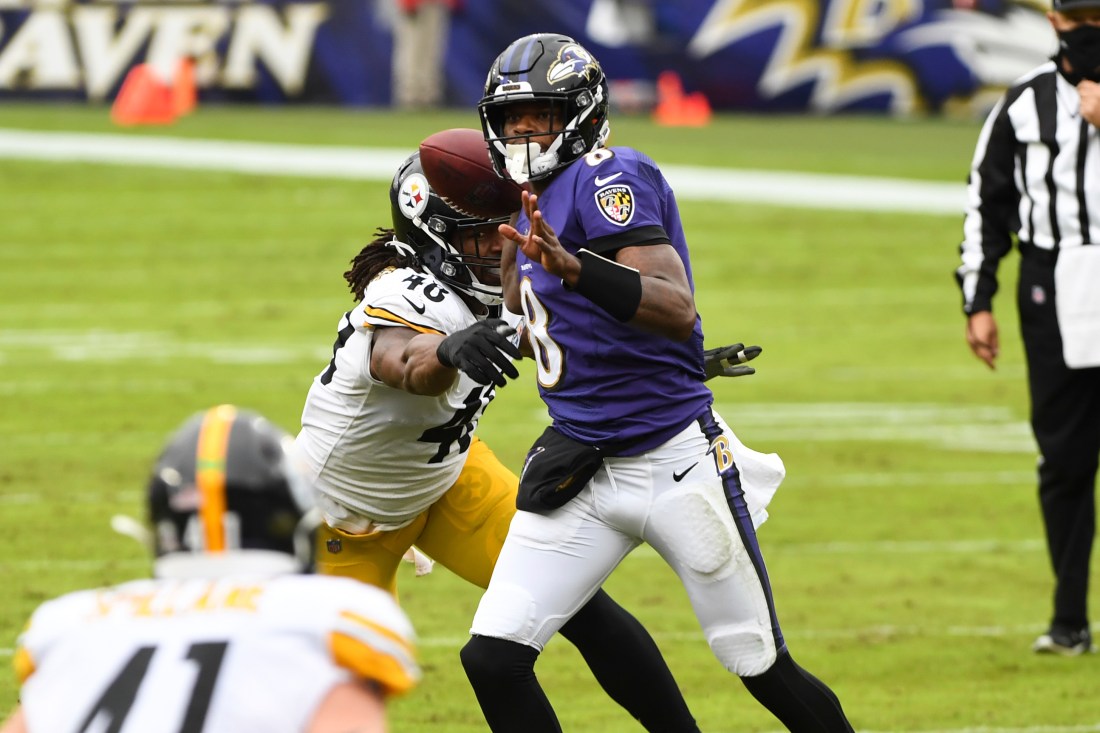
Baltimore Ravens quarterback Lamar Jackson (8) has ball stripped away by Pittsburgh Steelers outside linebacker Bud Dupree (48) during the first half of an NFL football game, Sunday, Nov. 1, 2020, in Baltimore. (AP Photo/Terrance Williams)

Baker Mayfield. Dak Prescott. Jalen Hurts. Brock Purdy.

This is not just a list of random NFL quarterbacks: These are some of the QBs that are comparable or better than Lamar Jackson in the playoffs.

The same Lamar Jackson that was drafted in the first round six seasons ago.

The same Lamar Jackson that won a unanimous MVP in his first full season starting.

And the same Lamar Jackson that won his latest MVP just last season.

Jackson has undeniably been one of the most electrifying players in the NFL since he came into the league in 2018. This year, he had the best passing season of his career, throwing for career-bests in passing yards, passing touchdowns, and interceptions with 4,172, 41, and four respectively.

In addition to the increase in passing production, he rushed for 915 yards and four touchdowns. His 915 rushing yards led all QBs in the NFL this season and was the most he’s had since 2020.

This elite level of play by the Baltimore Ravens’ superstar quarterback propelled his team to a 12-5 record and another AFC North division crown. These eye-popping numbers also secured him a first-team all-pro selection for the second consecutive season and the third time overall.

None of the other quarterbacks previously mentioned have even come close to what Jackson has been able to accomplish in any of their seasons. So, surely a player this great, this talented, this accomplished, and this consistent has no place on a list with above average-at-best QBs, right?

Wrong.

That same Lamar Jackson with all the talent and all the regular season accolades has nine total TDs, nine total turnovers, and a mere two playoff wins under his belt.

Let me clarify those numbers a little further: Every time Jackson scores in the playoffs, he negates it by providing the other team with an extra opportunity.

This has been the biggest stain on his career: Seemingly none of the success that he finds in the regular season has translated to the postseason, and that is why he finds himself being mentioned with quarterbacks that we generally do not put in the same tier as him.

The numbers may not necessarily paint a complete picture of his playoff track record, but his tape does. If you wanted to summarize Jackson in the playoffs with one game, look no further than the 2023 AFC Championship game.

He threw one TD in that game, but also threw an interception in the red zone and missed many easy throws and opportunities. And, despite the defense holding Patrick Mahomes and the Kansas City Chiefs to a very respectable 17 points, Jackson’s Ravens still lost the game because he only managed to put ten points on the board.

The Ravens consistently have both one of the best offenses and defenses in the NFL year after year, and this team has been adequately built to compete for a Super Bowl title. If their franchise QB played anything close to the way he plays in the regular season, maybe they could have already been there.

The bottom line is that Jackson is too great of a player to even be mentioned in a list with those names.

His film and resume clearly shows that he is levels above not just those four guys, but most of the QBs to ever play in the National Football League. Jackson should be exclusively in elite QB conversations who can be counted on to come through when his team needs him the most, but he needs to elevate his performance in the postseason to invalidate the current narratives surrounding him and cement his legacy once and for all.

The good news for Jackson is that this Saturday, he will have a golden opportunity to debunk not just that narrative, but another one that has also been haunting his name for a while: His performances against the Pittsburgh Steelers.

Baltimore’s biggest rival has historically had Jackson’s number in their matchups. In six games against the Steelers, he has scored eight TDs and nine interceptions en route to a 2-4 record.

These numbers are almost identical to his playoff stats.

This wild-card weekend, he gets a chance to show that there is no stage too big for him and no opponent that he can’t overcome. If he doesn’t do it now, that raises the question: Will he ever get over his playoff woes?

The NFL world will find out Saturday night if he’s got what it takes to distance himself from non-elite QB talks. It’s now or never for Lamar Jackson.

The Philadelphia Eagles Have a Nick Sirianni Problem

Eagles Coach Nick Sirianni. Photo Credit: AP

PHILADELPHIA – Save yourself from heartbreak while you still can, Philly fans: Nicholas John Sirianni is an abomination of a football coach, and the Eagles’ Super Bowl window will continue to close as long as they keep allowing this man to be in command.

Now, I know you might be thinking, “How can you possibly say that when a 2nd-year Sirianni led the Eagles to the Super Bowl 2 years ago?”

The answer to that question comes down to two main reasons: He was never that important to the Eagles’ success, and he was never the right person to pair up with quarterback Jalen Hurts.

When Sirianni was hired on January 21, 2021, owner Jeffrey Lurie and general manager Howie Roseman were clearly impressed with the vision that Sirianni brought to the table. After all, he was inheriting an offense and a quarterback that had been completely broken in the horrendous 2020 season; any coach taking that job would need an extensive plan to restore the team and culture.

Here’s the problem: This vision was based on the idea that Carson Wentz would be the quarterback of the future. When Wentz was traded to Indianapolis on February 18, 2021, this vision was killed.

Wentz and Hurts are two completely different types of players, and a vision designed around a big, strong-armed pocket passer isn’t going to translate well to a smaller QB whose biggest asset is his legs. Four seasons later, although Hurts has developed tremendously, Sirianni has still not figured out how to install a successful system around Hurts.

Do not get it twisted: Hurts’s massive success was not because of Sirianni.

That credit goes to then-offensive coordinator, Shane Steichen.

Ever since Steichen left to coach the Indianapolis Colts in the 2023 offseason, Philadelphia’s offense has been a calamity, and Hurts leads the league in turnovers.

However, this is not the first time that the Eagles have been bad offensively when Steichen is not the leading voice.

In the 2021 season, Sirianni called offensive plays for the first seven games. The team was 2-5 in that stretch. After he handed the offense over to Steichen, Hurts and the offense took off, won seven out of their last ten games, finished 9-8, and earned a playoff spot.

After some improvements to the roster and an offseason to completely master Steichen’s system, Hurts’s effectiveness in the passing game took a massive leap, and the offense exploded the next season, finishing second in scoring offense and top five in many statistical categories in 2022.

Even though Sirianni was there overseeing it all, he is only 15-13 without Steichen running the show on offense, and they haven’t even looked close to the machine that this offense was with Sirianni having this much power over it.

Not only has the offense looked anemic more often than not under Sirianni, but the defense has been even worse. While I won’t pin the defense’s falloff on him, it still provides even more reasons for them to move on from him.

When the 2023 Miami Dolphins’ defense was stagnant due to key injuries, Mike McDaniel was able to keep the Dolphins afloat and in playoff contention because he’s an offensive head coach, and he makes sure that his side of the ball is taken care of.

Mike Tomlin has been able to keep the Steelers above .500 and in the playoffs for many years despite having lackluster offenses because he’s a defensive coach, and he always makes sure his side of the ball is taken care of.

That’s what you’re supposed to do as an NFL head coach: Even when the team trajectory looks bleak, you are supposed to patch the ship and steer it back in the right direction by taking care of your side of the football.

If you can’t command either side of the ball or fix major deficiencies, then what do you actually bring to the table?

This has been the question that has plagued Sirianni since the moment he gave up play calling duties in 2021. When the Eagles had success, nobody really cared about what Sirianni’s contributions to winning were because winning cures all.

But the 2023 season collapse and now the lackluster start to the 2024 season has proved that Sirianni’s biggest contribution to winning was the offensive coordinator that he brought with him. Once he departed, he failed to replace him, and the team tanked as a result.

Now, it is clearer than ever that unless the Eagles want to keep playing coordinator roulette to determine their success, Sirianni needs to go. Period.

Eagles’ Struggles Continue in Lackluster 33-16 Loss to Buccaneers

Eagles quarterback Jalen Hurts surrenders a strip-sack fumble to Buccaneers linebacker Lavonte David. Photo credit: Nathan Ray Seebeck – Imagn Images

TAMPA, FL. –  No, Philly fans, this is not a bad dream: The real Eagles have stood up and verified that the 2023 season collapse was not just a down year, but a preview of the new direction that the team was headed.

The Eagles put yet another embarrassing performance on tape yesterday, getting routed by the Tampa Bay Buccaneers by a score of 33-16. This marks the fourth time out of five games in the Jalen Hurts/Nick Sirianni era that the Eagles have lost to the Bucs.

Arguably, this was the worst loss of them all – and that’s saying a lot, considering the last matchup between these two teams was a 32-9 grand finale to one of the worst collapses in NFL history.

Philadelphia failed to score in the first quarter for the fourth game in a row, making them the only team in the NFL this season to not score any points in the first quarter. Combine this with a defense that allowed two touchdowns in the first five minutes of the game and a third TD ten seconds into the second quarter, and the result is a borderline unwatchable performance that at minimum rivals the 2023 wild card round loss.

Whether or not fans will give the Eagles’ offense a pass for their performance is still up in the air. Although it looked eerily similar to their performance in the 2023 playoffs, it simply cannot be ignored that they were without their top 2 wide receivers, A.J. Brown and DeVonta Smith, as well as all-pro right tackle Lane Johnson.

To make matters worse, the extreme feels-like temperature of 106 degrees knocked center Cameron Jurgens out of the game with cramps, forcing pro bowl left guard Landon Dickerson to play center for the rest of the game while backup Tyler Steen filled the vacant left guard spot.

However, if you think for one second that the city of Philadelphia isn’t going to be in an uproar over that abysmal defensive performance, you may want to think again.

All eleven starters were active to start the game, and once again, they were awful at every level. The defensive front was dominated all game and the secondary was atrocious, giving up 24 points in the first quarter and a half. Defensive coordinator Vic Fangio and his crew had no answers for Bucs quarterback Baker Mayfield, who threw for 347 yards, 2 TDs, no interceptions, and completed 11 of his first 12 passes.

“I didn’t have the guys ready to start,” coach Sirianni said after the game.

That statement is 100% true, and not just for this game, but for each of Philly’s four games this season. The Eagles are now 3-8 including playoffs since the start of their 2023 season collapse in December, and they will now head into the bye week at 2-2.

It’s safe to say that Sirianni is on one of the hottest seats in the NFL right now, and if his Eagles continue to look this way moving forward, his worst nightmare will become a reality.