
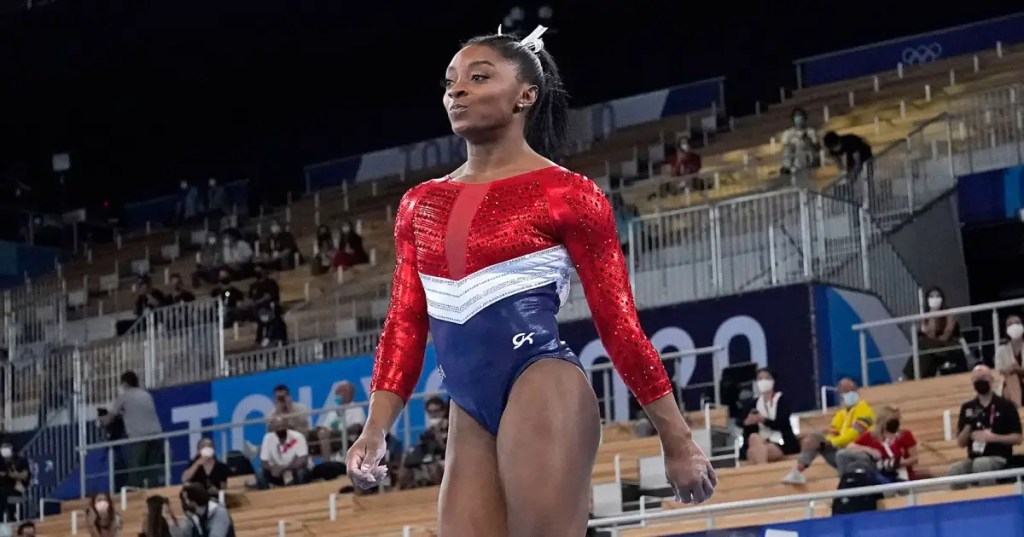
The topic of mental health in professional sports is one of the most prominent in modern sports discourse. In a world where the sports world is constantly evolving and the sports media landscape is rapidly changing; there have been few issues that went from being widely overlooked by the sports world to becoming a sensationalized and controversial discussion the way that the topic of mental health in sports did when superstar gymnast Simone Biles announced that she would be immediately withdrawing from the Tokyo 2020 Olympics due to mental health troubles and not being in the right mental space to be able to continue competing without risking getting hurt. This news made shockwaves around the world, especially in the United States, who had learned that one of the best athletes the country had to offer would not be out there to help Team USA defend their 2016 crown. There was a wide range of reactions to this news, and this sparked a grander intense conversation within the media about how professional athletes’ mental health should be treated. This paper will examine data from numerous reports from American media outlets to analyze how the media framed Biles’ decision to withdraw from the competition, explore what frames emerged, how these frames influenced the public discussion about the treatment of mental health in professional sports, and identify some of the broader ramifications that media framing has and opportunities for positive change in the sports community.
Professional athletes have long been subjected to narratives about never-give-up ideology. Oftentimes, athletes are expected to be tough, brave, and resilient in the face of adversity from the moment they decide to participate in a sport. This mentality is generally seen as great for athletes to have, and many professional athletes attribute their success to this ideology. Members of the sports community, from pro sport executives all the way down to the casual fan, praises those who exhibit these characteristics and criticize or shame those who do not, and subsequently, sports media has a deep history of framing athletes within the constructs of these ideas. However, the universal adoption of these values in sports has posed some issues in recent history because there are seemingly no exceptions or considerations for the mental state and health of these athletes. The national shift toward mental health awareness spread into the sports world, and athletes such as Naomi Osaka, A.J. Brown, Michael Phelps, and many others have spoken out about their own battles and the constant pressures that they feel to continue to perform and keep their mental health struggles as afterthoughts. A lot of high-profile names have encouraged others to prioritize their mental health and get treatment if they are struggling, but in the case of Biles, her decision to withdraw from the Olympic games due to her struggles was the first of its kind. It not only put a sudden giant magnifying glass on an issue that was gradually making its integration into sports culture, but also gave the media the leeway to be able to frame this situation and set the tone for the mental health public discourse that would soon follow. This essay will attempt to answer questions about how various media outlets initially reported Simone Biles’ withdrawal from the Tokyo 2020 Olympics, what narratives emerged in the media about Simone Biles’ mental health and her decision to withdraw, what impact the framing of mental health in professional athletics had on the public perception about mental health in sports. The media’s response to Biles’ withdrawal will be observed using media framing theory, a concept that explains the ways that the media presents, emphasizes, and deemphasizes specific aspects of a situation in pursuit of shaping the way that the audience interprets and subsequently judges it. By applying this theory to her situation, we can answer these questions as well as the ultimate question: Did the framing of Simone Biles’ decision to withdraw from the Olympics push the acceptance and support of athlete mental health struggles forward, or did it further add to the historical stigma and rejection by the general public?
This study will collect data from The New York Times, Washington Times, Spectrum News, Spiked Online, CNN, and Today. All of these articles were published between July 2021 and September 2021. There were a few key factors that played into the selection process. First, it was important for this study to include a varying range of different media outlets; some are instantly recognizable nationally and generally respected, and some are smaller outlets that do not have as big of a reputation. Many of these companies appeal to specific audiences based on their reputation, so this was done to get different aspects from outlets with different biases and tendencies to try to represent a variety of people and perspectives. For example, CNN has been known to lean liberal and appeal to wide-ranging age groups, while the Washington Times have cited themselves as conservative and have an older audience. The reason for the two-month period was to get insight on initial reports and reactions and examine if and how these narratives developed or changed over time. The sources selected all contain key headlines, words, phrases, and stances that played into the frames that they chose and ultimately give a clear stance on where that outlet stands, and these observations will be used as data to determine whether the media outlet promoted sympathy and understanding of professional athlete mental health struggles or fueled harmful stereotypes and ideologies that exist within the discourse. Some of the articles chose to use words that indicate that they are in support of Biles, some indicate that they are critical of her, and some take a neutral stance and do not add to either frame.
The debate surrounding Biles can be boiled down to two main opposing frames: the “quitter” frame and the “act of strength” frame. The latter frame portrays Biles’ decision to prioritize her mental health as courageous and worthy of praise, while the former frame suggests that she should not be praised for quitting on her team and country and the move goes against principles that are taught in sports. Both frames were very prominent within the media and pushed heavily in these articles, but not all outlets took a definitive stance. For example, when The New York Times initially reported that Biles would be withdrawing from the 2021 Olympics in their article “Simone Biles Withdraws from All-Around Final at Olympics”, they were careful in the words that they chose to ensure that they were simply reporting the news and factors that led to this decision and not judging the decision in any way. This is highlighted by the headline as well as opening statement: “Biles will not compete Thursday…because she said she was not in the right mental space to continue without risking injury” (Macur). The key words there are “she said”. By opting to have that precede the reason that she gave, it further establishes that they are only reporting to the audience the truth of what she said, and there is no indication throughout this article or in the article “Simone Biles reflects 1 month after Olympics, responds to critics who call her a quitter” from Today that Biles is right or wrong for her decision (Gariano).
Some media outlets did take a definitive stance and clearly used framing theory to portray Biles’ withdrawal through a specific frame. One of these companies is CNN, who titled their article “Simone Biles’ withdrawal reminds us that she’s human – and still very much the GOAT”. Instantly, the audience can recognize they are in defense of Biles, and throughout the article, some of the phrases that they use such as “Biles has given the U.S. and the world a hero to root for – a hero whose mental health needs tending, something many of her fans can relate to” and “…she’s reminded us what happens when the burden of expectations become too heavy for even the most celebrated of us to bear”. They also made sure to include the trauma that she’s went through, including the sexual abuse from former U.S. Gymnastics’ doctor Larry Nassar, her brother being acquitted of murder charges, and her experiences as a Black woman in foster care, and the effects that the COVID-19 pandemic was having on everyone at the time (Andrew). It should be noted that they did not really include any information about how this decision impacted her teammates or her country, likely because it would take away from the “act of strength” framing that they are aiming to paint the situation. In the public discussion, many people who supported Biles and athletes prioritizing their mental health echoed these same sentiments as well as neglected to acknowledge the impact that this may have on others.
The Washington Times also used framing theory to influence how the public thought about Biles’ situation and athlete mental health, but with the opposing “quitter” frame. Right away, the title “Simone Biles is no hero. She is a quitter” is a clear indicator of the frame that the outlet was going to portray her through. Instead of using the word “withdraw” to describe Biles’ exit from the Tokyo 2020 Olympics, which is the official term for the decision, they consistently used the word “quit”. In fact, the word “withdrawal” is only used one time in the entire article. In comparison, the word “quit” and its variants are used 18 times. That is not the only term and phrase used to paint Biles and her in a negative light, however. The Washington Times called her decision embarrassing and criticized her for dropping out of the competition on the world’s biggest stage. They disagreed with the USA Gymnastics women’s vice-president’s referral to Biles’ act as “incredibly selfless” and called her incredibly selfish and self-centered, citing that she not only let her team down by quitting, but also her country, sponsors, and other gymnasts who could have taken her spot if she was not going to finish the competition that she already began competing in. They stated that in sports, athletes are taught “winners never quit, and quitters never win” and that it takes no courage to quit (Constantine). They firmly believe that she is not a role model and that her decision to quit is not what young athletes should be modeling after. Spiked Online also portrayed Biles’ decision to quit in the same frame. Although this outlet noted that the problem was not Biles herself, but the fact that everybody was praising her for withdrawing from the competition signaled a new growing culture in sports, they still used words and phrases that add to harmful stereotypes and indicate a clear use of the “quitter” frame. They even went as far as calling it a cult in their article title, “Simone Biles and the cult of the quitter” (O’Neill).
So, back to the ultimate question: Did the framing of Biles add to the mental health stigma or did it further push the agenda of acceptance forward? Technically, the answer is yes, the framing of Biles did help push the agenda forward, but not without mass amounts of criticism and pushback. The findings of this study just highlight the greater ongoing tensions within the sports community about traditional ideas of toughness and modern acceptance of athletes dealing with mental health and why media framing is so crucial to how we move forward as a community. A lot of the time, we as a sports community place radicalized and often unrealistic expectations on professional athletes. In the end, although they may seem like superhumans because of their incredible abilities, they are still just regular people like the rest of us when they are not in the field of play, and we often lose sight of that when we judge these athletes. I hope that moving forward, media outlets will be more responsible with the way that they cover and frame athletes. The media has great power when it comes to shaping the narratives around players and certain issues in sports, and they owe it to these athletes to be fair and considerate when it comes to issues that plague them off the field. The moral thing to do with these is to try and reduce the stigmas and stereotypes that professional athletes face, not fuel them. Specifically, when it comes to the mental health discussion, media outlets should aim to normalize vulnerability and prioritizing their personal needs over their careers, and they should push mental health initiatives and athlete empowerment so that athletes can comfortably take care of their mentals without having to worry about their careers being disgraced and tainted
The biggest shortcomings in my research are the lack of international media sources outside of the singular one that I used and the lack of hardcore quantitative evidence. In the future, I could improve my studies by including some social media analytics that support the validity of my findings and include more international media outlets to cover a broader audience and more perspectives. I also could include more opinions from professional athletes to further cement the effectiveness of my reports. Ultimately, Biles’ decision is a powerful catalyst for ongoing dialogue and policy change, and the sports community and media can learn and grow from her situation and encourage a more compassionate sports environment.
Works Cited
Andrew, Scottie. “Simone Biles’ Withdrawal from the Team Final Reminds Us That She’s Human – and Still Very Much the GOAT.” CNN, 28 July 2021, http://www.cnn.com/2021/07/27/sport/simone-biles-tokyo-olympics-withdrawal-spt-trnd/index.html. Accessed 28 Apr. 2025.
Constantine, Tim. “Simone Biles Is No Hero. She Is a Quitter.” Washington Times, 31 July 2021, http://www.washingtontimes.com/news/2021/jul/31/simone-biles-no-hero-she-quitter/. Accessed 28 Apr. 2025.
Gariano, Francesca. “Simone Biles Reflects 1 Month after Olympics, Responds to Critics Who Call Her a Quitter.” Today, 4 Sept. 2021, http://www.today.com/news/simone-biles-responds-critics-1-month-after-olympics-t230108. Accessed 28 Apr. 2025.
Macur, Juliet. “Simone Biles Is Withdrawing from the Olympic All-Around Gymnastics Competition.” The New York Times, 28 July 2024, http://www.nytimes.com/2021/07/28/sports/olympics/simone-biles-out.html. Accessed 28 Apr. 2025.
O’Neill, Brendan. “Simone Biles and the Cult of the Quitter.” Spiked Online, 14 Sept. 2021, http://www.spiked-online.com/2021/12/14/simone-biles-and-the-cult-of-quitting/. Accessed 28 Apr. 2025.
Tillman, Rachel. “Simone Biles Reflects on Decision to Pull Out of Olympics: ‘It Was Too Much.'” Spectrum News NY1, 28 Sept. 2021, ny1.com/nyc/all-boroughs/news/2021/09/28/simone-biles-opens-up-tokyo-olympics-decision. Accessed 28 Apr. 2025.
 Deshaun Clayborne Media